

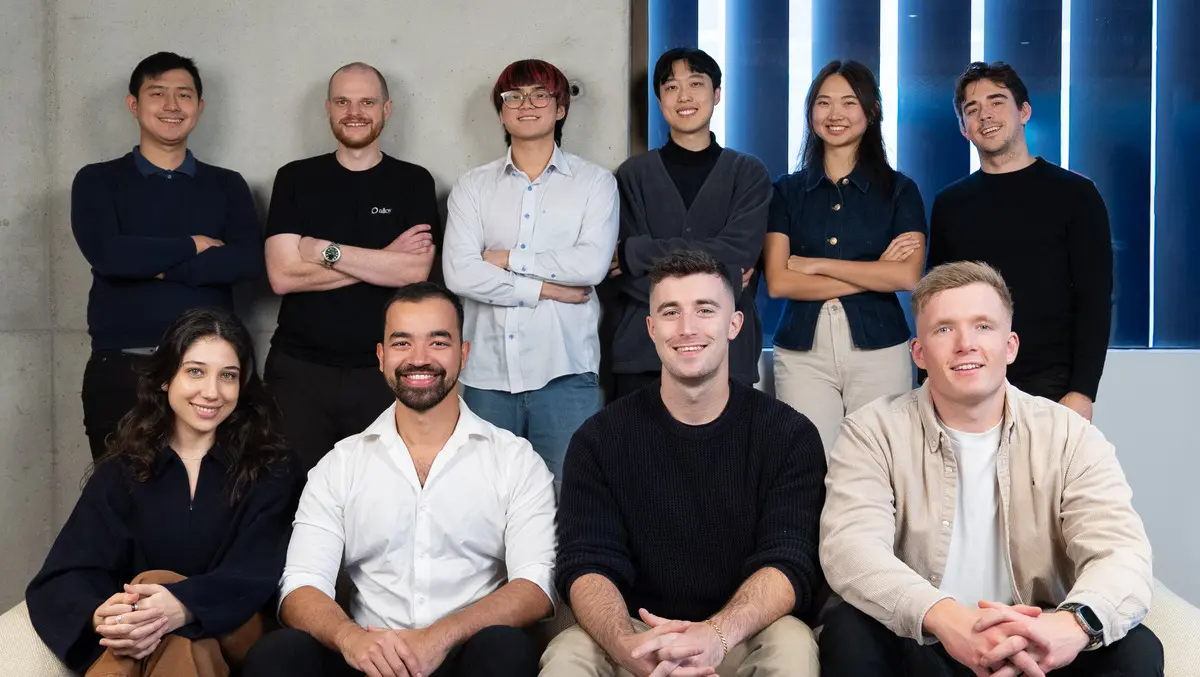
Alloy Robotics raises USD $8 million in seed round
Tue, 11th Aug 2026
Alloy Robotics has raised USD $8 million in seed funding in a round that values the company at USD $80 million.
Square Peg led the investment, with existing backers Blackbird, Airtree and Skip Capital also participating. The round also included leaders and engineers from OpenAI, Anthropic, Tesla, Waymo, Halter and Carbon Robotics, alongside several of Alloy's customers.
Founded in Sydney and now expanding in the US, Alloy develops AI agents that help robotics engineers investigate failures across robot fleets. Its software analyses logs, telemetry, video and sensor records, then connects that data with engineering context from tools such as Slack and Jira.
Robotics teams still often investigate incidents one mission at a time using dashboards, visualisation tools and custom scripts, an approach Alloy argues becomes harder to manage as fleets grow larger and more complex.
Joe Harris, Founder and Chief Executive Officer of Alloy Robotics, said the core problem is the volume of information engineers must sift through after a fault.
"When a robot fails, an engineer can spend days, sometimes weeks, working out why. Often the same issue has come up before," Harris said.
"The answer's in the data, just buried. And the more robots you run, the more often that happens. Alloy finds the relevant evidence and surfaces the pattern."
Its system continuously scans for anomalies, regressions and repeated patterns. Engineers can investigate known problems in natural language, and each finding links back to missions, timestamps and signals so teams can inspect the underlying evidence.
Customer use
Alloy is already being used by robotics teams in navigation, defence, drones, agriculture, maritime, humanoids, construction and medical robotics. Some customers process entire fleets through the platform, while others are incorporating it into the design of new robots.
Advanced Navigation is among the companies using the software. According to Alloy, field-test analysis that previously took a full day now takes less than 10 minutes.
"The conversation has completely shifted," said Jai Castle, Product Validation Manager at Advanced Navigation.
"Instead of 'Can we get this done in time?', it's 'What else can we go after?'" Castle said.
US autonomous-drone company DroneForge also described using Alloy to identify the source of a fault after an engineer initially suspected the wrong component was failing.
"Every time you misdiagnose, it can just compound," said David Crabtree, Engineer at DroneForge.
Growing market
Alloy is targeting a part of the robotics market where large operators have often built internal systems to manage and interrogate fleet data. Its pitch is that smaller and mid-sized robotics companies need similar tools without having to build that infrastructure themselves.
Square Peg echoed that view, saying the ability to learn quickly from operational data will help determine which robotics groups succeed.
"Robotics is one of the hardest industries to build in, and the teams that win will be those that learn fastest from their own data," said Jethro Cohen, Principal at Square Peg.
"Alloy gives every engineer the leverage to support far larger fleets. That is why we backed Alloy," Cohen said.
Its software also includes a native Model Context Protocol server, giving coding agents such as Codex and Claude Code access to mission context. The aim is to let engineers investigate faults without manually collecting raw files from different systems.
The seed funding comes just over a year after the company was founded. The new capital will go towards engineering hires, US expansion and further development of its models and agent platform.
Harris said the broader challenge for robotics companies is not only getting machines to function, but also learning from every deployment.
"The teams building robots today are creating machines that can do real work, safely, in the physical world," he said.
"Getting a robot to work is only the beginning. To earn trust at scale, teams need to learn from every run. Alloy turns everything a fleet does into knowledge that makes the next robot better, so the future arrives sooner."