

ControlTheory launches Dstl8 to feedback production issues
Fri, 2nd Oct 2026 (Today).webp)
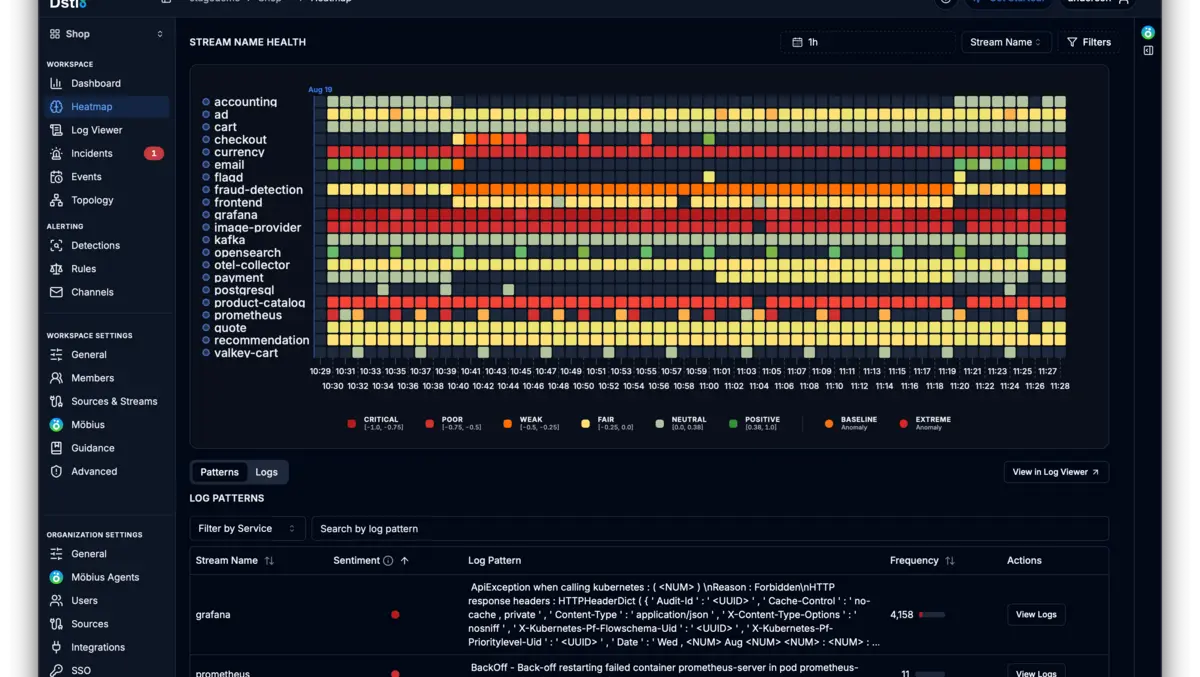
ControlTheory has launched Dstl8, a platform designed to feed runtime diagnoses back to software engineers and coding agents. The product is now generally available.
The Austin-based software group positions Dstl8 as a response to rising code volume and faster release cycles driven by artificial intelligence tools. Many monitoring systems were built for slower development cycles and are struggling to keep up with production changes.
Dstl8 analyses telemetry where it is generated rather than first moving all data into a central observability platform. The software reads telemetry content for sentiment, patterns, anomalies and severity, then links issues to deployment events and sends diagnoses into developer tools including Claude Code, Cursor and Codex.
The platform also stores each investigation and fix in a knowledge graph so previous incidents can be surfaced when similar problems recur. It works with Kubernetes, AWS CloudWatch, OpenTelemetry, Google Cloud, Supabase, Vercel and Railway.
How it works
ControlTheory calls the process behind the product Telemetry Distillation. The approach is intended to reduce the amount of data sent onward by extracting what it considers relevant signals at the source, including a measure described as sentiment based on the content, tone and confidence of system output.
According to ControlTheory, the platform identifies infrastructure and configuration issues and recommends fixes, while application code problems can be traced to the line of code. It is aimed at teams increasingly using AI tools to generate and ship software changes at a pace that can overwhelm traditional monitoring methods.
ControlTheory said an early customer in enterprise financial technology used Dstl8 across 13 Kubernetes clusters over two months. During that period, the system surfaced and resolved 328 incidents without the customer writing any alert rules.
"Code volume and code velocity are both climbing at once, and they amplify one another. The real problem isn't necessarily bad code; it's just more of it, moving faster than any team can keep up with and continuously feed back to the team that can fix it. Observability without feedback is just watching. A feedback loop tells the agent what to do next," said Bob Quillin, Chief Executive Officer and Co-Founder of ControlTheory.
Company background
Founded in 2024, ControlTheory was set up by executives with previous experience at StackEngine and CopperEgg, two start-ups later acquired by Oracle Cloud and Idera, respectively. The wider founding team has also worked on technologies later acquired by, or associated with, groups including Oracle, LogicMonitor, EMC, VMware and SolarWinds.
The launch marks a significant product step after the company raised USD $5 million in seed funding from Silverton Partners. ControlTheory has also released Gonzo, an open-source terminal user interface tool for real-time log analysis, which it said has attracted more than 2,700 GitHub stars since launch.
Gonzo was designed as a local tool for a single session, while Dstl8 is intended as a continuous system shared across engineering teams. The distinction reflects ControlTheory's effort to move from developer tooling into a broader software operations product as competition grows around AI-assisted coding and the systems needed to monitor code once it reaches production.
ControlTheory argues that the bottleneck in software operations is no longer only data collection, but getting a useful answer back to the person or system that made the change. Dstl8 is built around that premise, with an emphasis on linking production signals directly to the engineer or coding agent responsible for a deployment.