

Microsoft invests USD $2.5 billion in Frontier Company
Thu, 2nd Jul 2026
Microsoft is investing USD $2.5 billion to launch Microsoft Frontier Company. The new unit will place more than 6,000 industry, AI and engineering specialists inside customer organisations.
The business will focus on designing, deploying and refining AI systems tied to measurable commercial results. Microsoft described the move as a step beyond what the sector has commonly called forward deployed engineering, in which technical teams work closely with customers on implementation.
Judson Althoff, Chief Executive Officer of Microsoft Commercial Business, announced the initiative in a blog post outlining Microsoft's effort to turn rising corporate interest in AI into more concrete returns. The focus is on helping customers move from trials and pilots to operational systems measured against business performance.
The new organisation will combine engineering with sector knowledge, change management and ongoing system improvement. It is designed to place Microsoft staff directly within customer environments rather than rely only on remote advisory work or conventional software sales models.
Customer focus
The announcement comes as large technology groups try to persuade businesses that AI spending can deliver identifiable gains rather than speculative benefits. Many corporate users have spent the past two years testing generative AI tools while weighing concerns over cost, governance and whether data shared with external systems could weaken their competitive position.
Althoff said those issues are central to Microsoft's pitch. "Today we are introducing Microsoft Frontier Company, a new operating business focused on delivering Frontier Transformation through AI for our customers around the world," he said.
He added detail on the scale of the investment. "We are making a $2.5B investment in Microsoft Frontier Company, embedding 6,000 industry and engineering experts at customers to co-design, co-innovate, deploy and continuously improve AI systems at scale based on measurable business outcomes," Althoff said.
Early work under this approach has involved customers including LSEG, Land O'Lakes, Unilever and Novo Nordisk. In LSEG's case, Microsoft said its teams helped embed AI into LSEG Workspace so finance professionals could ask detailed questions across structured and unstructured financial content.
The example points to the kind of customer work Microsoft appears to be targeting: industry-specific systems tuned with user feedback and revised repeatedly after deployment. It also suggests the company wants to anchor AI projects in daily workflows rather than present them as general-purpose chat tools.
Platform choice
A central part of the strategy is Microsoft's argument that customers should not be tied to a single AI model provider. The platform supporting Frontier Company will remain open to models from OpenAI, Anthropic, Microsoft AI, open-source developers and specialised sector providers.
That position reflects a broader market shift as business users compare model performance, cost and compliance requirements across different tasks. It also gives Microsoft room to present itself as an intermediary that can manage multiple model options while keeping customers on its broader software and cloud stack.
Althoff said data protection is a key selling point. "Central to this approach is a principle that is non-negotiable: a customer's IQ is protected," he said.
He added: "Their data, their IP, their competitive advantage - none of it is used to train models in ways that commoditise what differentiates them in their industry."
That assurance addresses one of the most persistent concerns among large companies adopting generative AI. Businesses in regulated sectors and knowledge-heavy industries have been cautious about sharing internal information unless they can control how that data is stored, governed and reused.
Leadership and partners
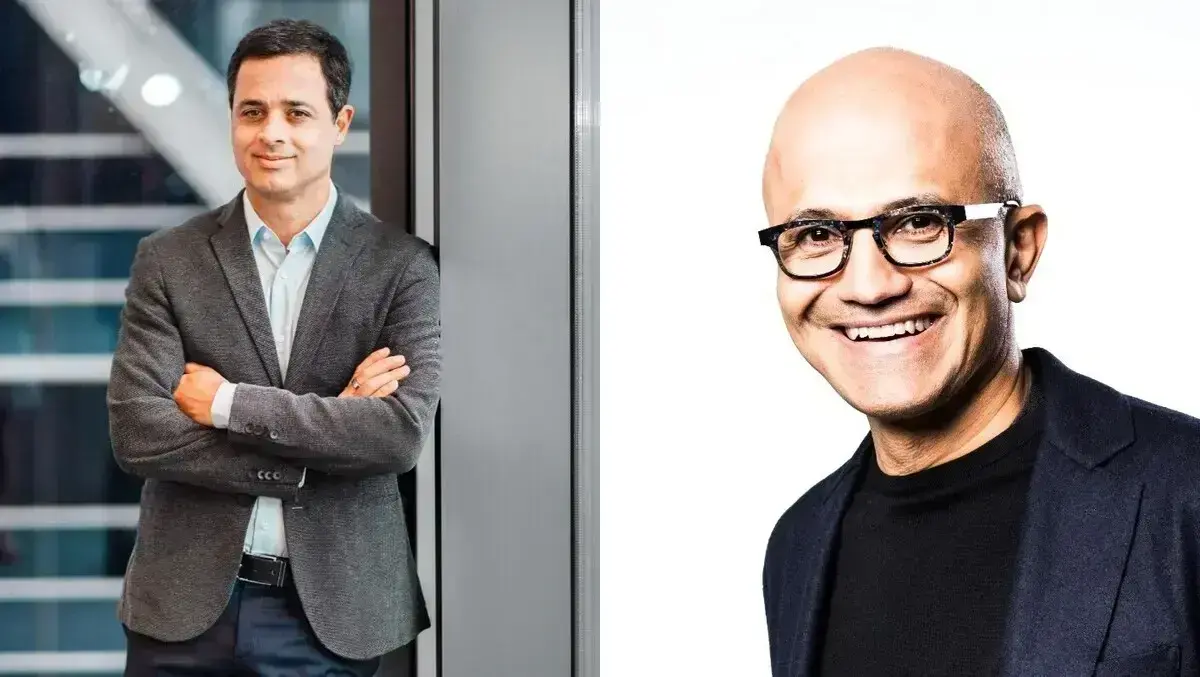
Microsoft has appointed Rodrigo Kede Lima as President of Microsoft Frontier Company. He brings 30 years of industry experience and has spent the past six years at Microsoft working on enterprise transformation with customers and partners in the Americas and Asia.
The group also said it would work with consulting and systems integration partners to extend the model globally. It named Accenture, Capgemini, EY, KPMG and PwC among companies with which it already has forward deployed engineering relationships.
The move puts Microsoft in more direct competition with both cloud rivals and large consulting firms that have sought to position themselves as the main route for corporate AI adoption. By combining software, cloud infrastructure, model access and embedded engineering teams, the company is trying to claim a larger share of the execution work around AI programmes.
It also underlines how the battleground in AI is shifting from model launches to implementation inside large organisations. As more customers demand evidence of returns, suppliers are under pressure to show not only that their tools work, but that they can be adapted to a company's specific data, processes and operating constraints.
"Customers shouldn't be locked into a single model any more than they should be locked into a single technology vendor," Althoff said.