

Ramp unveils AI Accounting Agent to speed month-end close
Sun, 15th Feb 2026%201.webp)
Ramp has launched an Accounting Agent within its spend management platform, positioning it as a way to reduce manual work in transaction coding, review, accruals, and reconciliation during the month-end close.
Ramp frames the product around a common accounting bottleneck that many finance teams spend significant time coding transactions and checking entries before they can close the books.
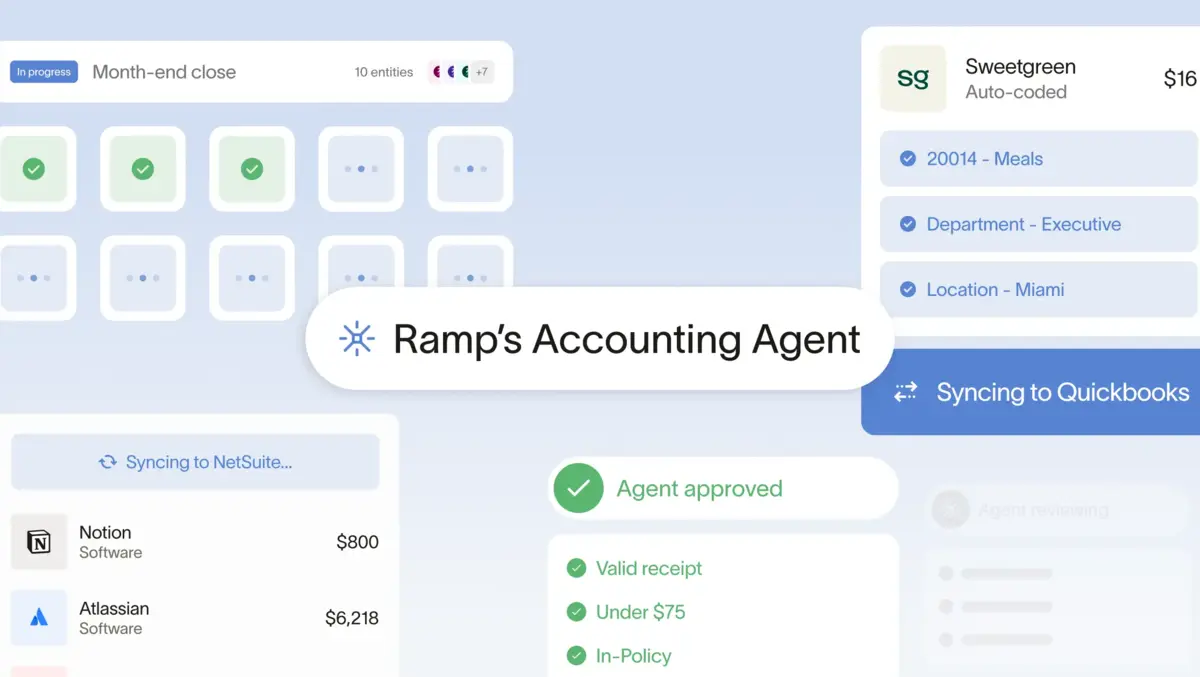
The Accounting Agent fits into Ramp's existing workflows. It assigns coding as spend occurs, flags items that need human judgment, and can automatically post selected transactions into a customer's accounting system based on the controls the customer sets.
Ramp says the product does not rely on pre-built "if this then that" rules. Instead, it uses transaction context and patterns from a customer's historical activity and adjustments.
From spend to posting
Ramp says the Accounting Agent takes a first pass at coding "every line item" and reviews "every transaction." It fills required fields such as general ledger code, department, class, location, and any custom field. Ramp also says it can split bills and code at the line-item level, so a single invoice can post across multiple ledgers or departments.
Customers can set what actions the product is allowed to take, from coding and review to syncing transactions into an accounting system. Low-risk transactions can post automatically once required checks are complete, according to Ramp.
For exceptions, the Accounting Agent flags transactions that involve uncertainty or require judgment. Ramp says it checks submission completeness, coding certainty, and vendor history, then presents context for review.
Ramp also describes a feedback loop in which finance teams correct transactions using plain-language instructions, with the system learning from both the change and the explanation. One example: "Code Uber rides for the LA sales team to 'Client travel' going forward."
Accruals and reconciliation
Ramp has also included accrual and reconciliation features aimed at timing and completeness issues that can arise at period end. The product can accrue transactions that are not ready to sync, so spend lands in the correct accounting period, then reverse the accrual in the following month.
Ramp says the product reconciles with a customer's ERP in real time and flags missing, duplicate, or mismatched transactions. It positions this as an alternative to manual spreadsheet reconciliation between card statements and general ledger exports.
"Ramp's Accounting Agent picks up the nuances, like when spend belongs in samples instead of travel and entertainment. It's learning how we actually operate," said Jim Romano, CFO of Stateside Brands.
Performance claims
Ramp is making several performance claims about adoption so far. It says thousands of teams are using the Accounting Agent, with "3.5x more transactions coded automatically compared to legacy tools." It also reports "98% accuracy" when it determines a transaction is "ready to sync" to an ERP, and says customers see "70% fewer corrections within the first month as Ramp learns their accounting logic."
Ramp also links the product to faster closes, arguing that accounting work moves forward during the month rather than accumulating into a month-end backlog. That approach makes close "3x faster every month" and improves the timeliness of numbers available to management, according to the company.
The launch adds to a broader shift in finance software toward systems that classify and post transactions continuously rather than treating month-end as the primary processing window. That trend has put pressure on traditional rule-based automation, which can struggle when merchant names, receipt detail, project allocation, and expense purpose conflict.
Ramp points to categories that can change based on context, such as a hotel charge that could represent travel, dining, or client entertainment. It says these edge cases can drive re-coding and delays when teams discover mismatches between general ledger categories and what was actually spent.
The Accounting Agent is integrated into Ramp's spend workflows, with transaction coding starting at the time of spend. Ramp says it reviews transactions before a finance user logs in, aiming to narrow review queues to items that carry higher risk or require a decision.
"Ramp's Accounting Agent has completely changed how we operate. What used to take hours of manual review now happens automatically - and it's accurate enough that I'd trust 98% of transactions to auto-sync without review," said Neusha Sayadian, Fractional CFO, Valence.
Ramp has positioned the Accounting Agent as an alternative to manual checks and rule maintenance across expense tools, card programs, and accounting platforms. It says customers can limit automated actions to keep approval control with finance teams while increasing the share of transactions that post without manual intervention.