

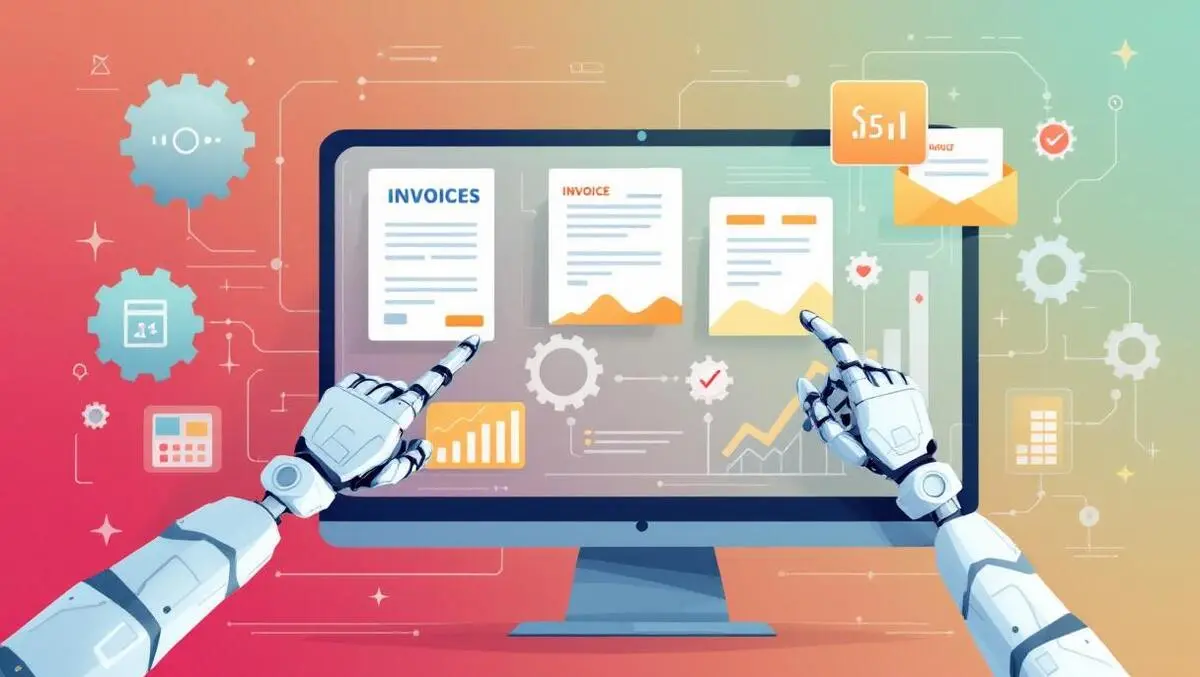

Artificial intelligence is poised to reshape B2B payments and transform finance functions, according to predictions from Chris Couch, Head of Product, B2B, at payments provider Flywire.
Integration shift
Couch foresees APIs, long a backbone for connecting business systems, being replaced by AI agents capable of reading and interpreting documents natively. By 2030, finance teams will forgo traditional integrations as AI systems extract data from invoices, contracts and emails without manual coding or predefined data formats.
This development signals a move away from months-long integration projects. Instead, companies will deploy AI agents which can instantly understand documents in any format. In practice, this would make processing invoices and executing contracts fully self-service.
Error recovery focus
Couch expects that finance teams will shift their main concern from accuracy to recovery speed. AI systems may not reach the same level of precision as human processors, but he argues that the ability to rectify errors instantly provides a stronger business case than striving for perfection.
With AI able to process thousands of transactions rapidly, operational efficiency gains are prioritised over small differences in accuracy. CFOs will begin to focus on how quickly AI solutions can identify and correct mistakes, rather than their headline accuracy percentages. The value calculation, according to Couch, depends increasingly on the 'Autonomy Tax'-the real cost balance of fixing errors against speed gains.
Intelligent documents
Another change anticipated is the evolution of business documents into autonomous software agents. Within five years, the line between static contracts or invoices and interactive programmes is predicted to blur. Documents will not only communicate terms but actively enforce them, triggering and negotiating follow-up actions as required.
AI language models are already parsing agreements and triggering workflow actions. Couch believes the next step is for every document to function as an agent: preventing duplicate processing, optimising payment schedules, and automatically updating financial forecasts without human involvement. For example, invoices would escalate if ignored, and contracts would detect and flag potential violations automatically.
Workforce transformation
AI adoption is also likely to redefine the finance workforce. As automation handles routine tasks, Couch predicts a stark division in roles. Finance professionals will either specialise in advancing AI systems, teaching them business rules and exceptions, or focus on higher-level decision-making tasks that remain beyond AI's reach.
Junior employees will not move up traditional career ladders but pivot towards roles in AI training. Senior professionals will need to focus on strategic, risk-based decision-making as AI absorbs the mechanical accounting functions. The most valuable individuals, according to Couch, will be those adept at encoding complex requirements and ethical standards into autonomous tools.
"Finance teams today are confusing 'reliable' with 'refusing to evolve.' Those too slow to adapt will see their current tech stack look like a museum exhibit by 2030," said Chris Couch, Head of Product, B2B, Flywire.