

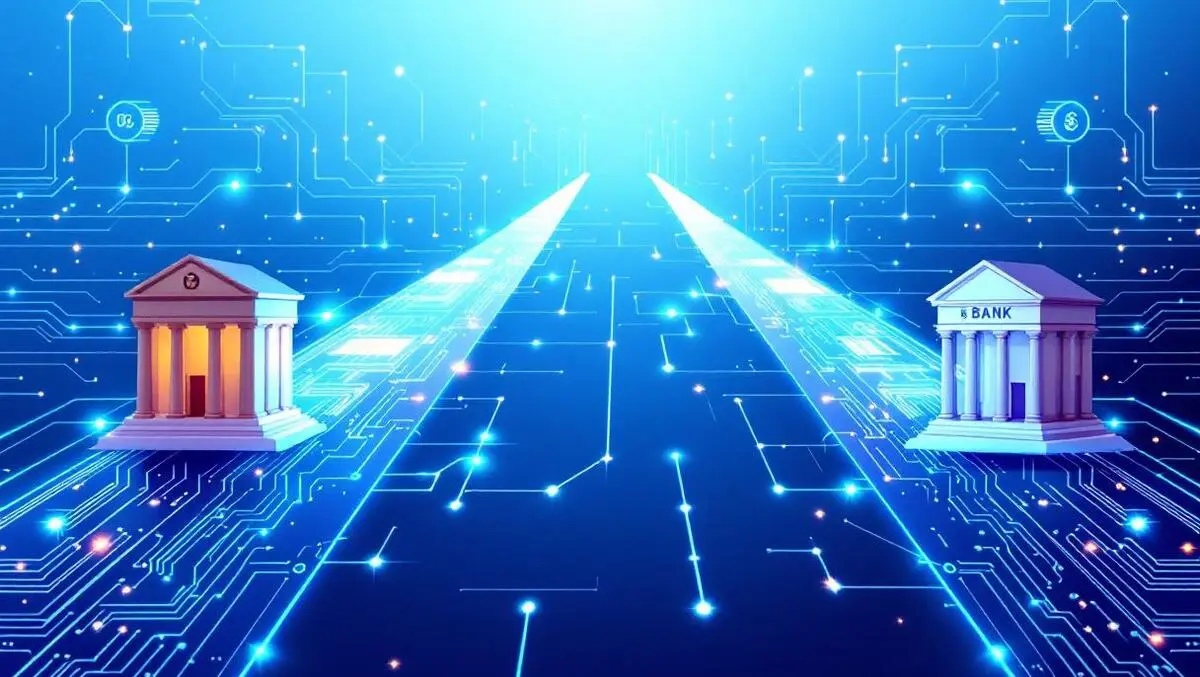
The case for multi-rail instant payments in an interoperable future
Wed, 30th Jul 2025
In enterprise payments, speed and flexibility are critical components of the modern formula for success. When it comes to moving money in real time, financial institutions and fintechs in the U.S. have benefited from dual rails: The Clearing House's RTP network and the Federal Reserve's FedNow Service. These networks provide reach and reliability for businesses, particularly those moving large volumes of money daily. The next frontier? Ensuring enterprises can intelligently connect to both.
That's where multi-rail orchestration comes in. Instead of choosing one network over another, modern payment platforms are building the infrastructure to seamlessly operate across both. Think of it as API-level interoperability: a layer that routes payments based on the recipient bank's network compatibility, uptime and performance.
For enterprise finance teams, that means better cash flow visibility, fewer manual decisions and reduced risk.
Why Dual-Rail Infrastructure Matters
After launching its FedNow Service two years ago, the Federal Reserve joined the Clearing House's RTP network to provide real-time payment networks at scale in the United States. Each has a growing footprint, yet neither offers complete coverage on its own.
That's a challenge for businesses aiming to guarantee speed without sacrificing reach. Enterprises shouldn't have to choose between network A or B, they should be able to access both, dynamically. Multi-rail orchestration addresses this, allowing payments to be routed through whichever network the receiving bank supports. This is more than just operational efficiency - it's strategic resilience.
Intelligent Orchestration: More Than a Technical Layer
From a systems perspective, intelligent orchestration sits atop both networks, abstracting the complexity away from developers and finance teams. Its real value lies in what it unlocks: automated eligibility checks, fallback options in the event of downtime, unified reporting across rails and data-rich insights delivered in real time. Think of it as the control tower for instant payments, directing traffic efficiently, securely and intelligently.
The Business Case: Cash Flow, Control and Customer Trust
Instant payments aren't just fast, they're transformative. They improve working capital positions by making funds available within seconds. They reduce reliance on credit, shorten the order-to-cash cycle and enable real-time payroll and vendor disbursements. When customers or partners receive money instantly, their trust deepens. That trust becomes loyalty and loyalty becomes retention. Critically, for businesses managing thousands (or millions) of transactions, having a reliable and predictable flow of funds is the difference between reacting and proactively managing growth.
Navigating a Fragmented Landscape
Still, instant payments are hindered by reach. At present, the RTP network supports a majority of demand deposit accounts in the U.S., while FedNow is expanding rapidly, with over 1,400 participating financial institutions and growing. Without orchestration, businesses would be required to engage separately with each rail, maintain multiple integrations and reconcile across disparate systems.
This creates friction, and friction is the enemy of scale. However, intelligent orchestration makes it so that a single API or integration layer can automatically abstract the decision-making process and route payments based on the receiving institution's capabilities.
A Broader Implication: Interoperability
At a macro level, multi-rail capabilities reflect a shift toward greater interoperability in the U.S. financial system. It's a move away from siloed infrastructure and toward a future where money moves as seamlessly as data.
This isn't just a win for businesses, it's a win for consumers, platforms, developers and the financial system as a whole. When we reduce barriers to moving money in real time, we enable new business models, expand financial inclusion and accelerate innovation.
Looking Ahead
According to industry projections, more than 80% of businesses plan to adopt some form of instant payments by 2026. This shows the challenge isn't interest, it's execution. To that end, success won't come from offering real-time rails but from offering the intelligence, abstraction and flexibility to use them effectively. Businesses need infrastructure that adapts with them, scales as they grow and simplifies what's complex.
The promise of instant payments lies not just in speed, but in the control, insights and reach they enable. Multi-rail orchestration, leveraging both RTP and FedNow, makes that promise real.